
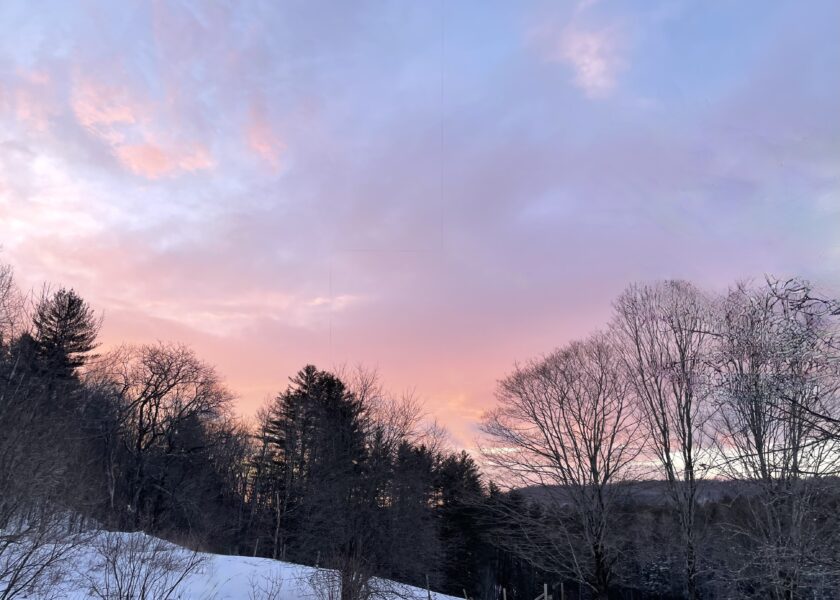
It’s not yet 4:30 and already the sun has sunk behind the western hills. The pinkish gray twilight won’t last much longer.
I’ve just returned from filling the bird feeder. I was reluctant to come in, so I lingered in the yard listening to a chickadee scolding me for letting the seed level get so low. It was also an opportunity to bask in the day’s few remaining moments of sunshine. They are precious in this dark and cloudy December.
Winter solstice – the longest night of the year – is upon us.
The general gloominess of the first half of December seems at odds with the energy of our culture desperately trying to convince us that we should be happier this time of year than any other. Can’t you just hear “It’s the most wonderful time of the year” and “Holly Jolly Christmas” echoing through the halls of the local shopping center?
But what if you don’t feel jolly or like it’s the most wonderful time of the year? What if this season is difficult?
I’ve heard a number of stories from people this year who say that they feel out of sync with the season. For some it’s because they live with seasonal affect disorder. Others have recently experienced significant losses and are in the midst of their sadness and grief. And for many more, memories resurface at this time of year, taking them by surprise.
None of this surprises me. Over the years I have lost several loved ones in this season. And navigating my way through grief was isolating and lonely when it seemed that everyone around me exuded joy and happiness.
Though I have come to a place where the pain of those losses has dulled, there are still times when a photo or a sound or even a smell catches me off-guard. It’s as if Jacob Marley, that old ghost of Christmas past, has suddenly appeared dragging his chains of grief and regret. I feel the stab loss all over again, though the acuity has lessened over time.
Paradoxically, it’s those losses and the grief they’ve ushered in that have helped me to experience this season most fully. It was when I was at my lowest point that small acts of kindness and compassion impacted me most powerfully. In my darkest moments those actions were rays of light. Ever so slowly I began to envision life beyond the present moment.
Many major spiritual traditions have rituals for this time of year, recognizing and embracing the darkness and anticipating the return of the light.
For Christians, the season of Advent coincides with the darkest days in the northern hemisphere. The messages in the first half of Advent urge us to wake up, open our eyes, and see clearly the world we live in, with all of its cracks and fissures. But in the second half of the season, as we draw closer to Christmas, the messages become more comforting and hopeful. From the Hebrew prophets we hear words like, “Comfort ye my people,” and “The desert shall blossom,” They orient us to the powers of hope, peace, joy, and love. These forces are strong enough to overcome the brokenness of this world.
Winter solstice comes just a few days before Christmas. For those of us living in the northern hemisphere, this is day that the hours of daylight grow slowly and almost imperceptibly longer as the hours of darkness are diminished. It’s a day that reminds us that as if it’s possible for the darkest days to diminish, it’s also possible for our grief and pain to abate. The light of a new year, and a new place in life is about to dawn.